
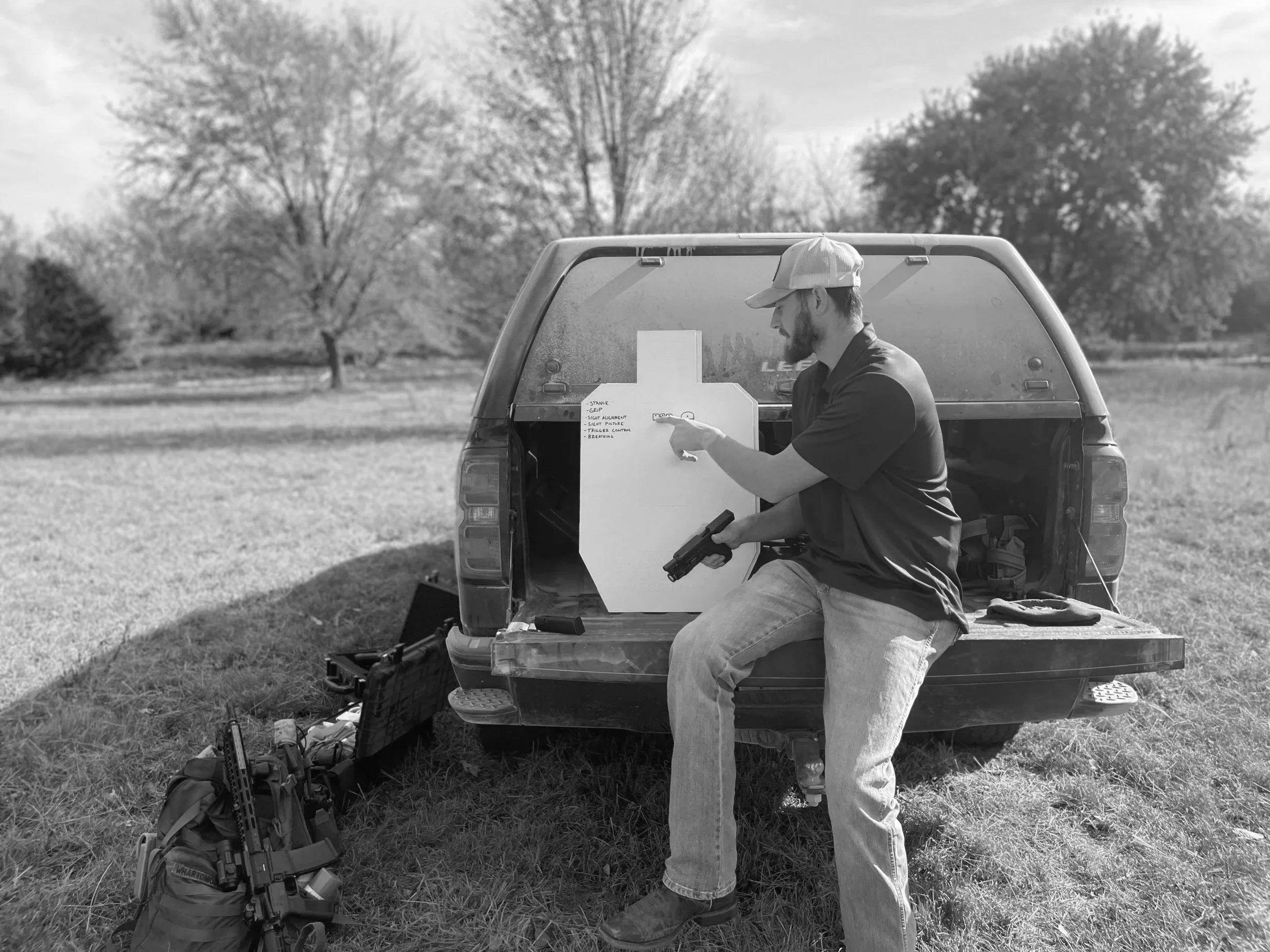
Church Security Teams and Law Enforcement Contracts
Law Enforcement Contracts
Contract options are offered to law enforcement agencies to provide private access to our range in order to conduct training. Contract options will be negotiated according to the training requirements/needs of the customer. All contracts are issued on a case-by-case basis.
Inquire about an Agency Contract - Request a Quote
Living Stones Ranges and Training understands the intrinsic value that God has placed on human life. Live fire training is a requirement to responsibly defending life with a firearm. It’s even more important when you stand before a congregation or community and are held accountable for their safety. This is why our aim is for your team to be trained to a high level of competency. We understand how hard it is to access valuable training spaces. This is why we offer contracts for private range access to your team. Indoor ranges aren’t suited for security or LE training. Furthermore, most outdoor ranges restrict your movement or have unreasonable range rules. We don’t. LSRT is the place to learn to shoot, move, and communicate. It’s also the place to develop unity, camaraderie, and confidence in your team.

Church Security Team Contracts
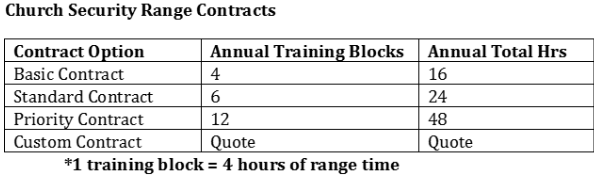
Contracts options are offered to church security teams to provide private access to our range in order to conduct team training. Some churches have security team leaders that are capable of safely instructing and training fellow church members to shoot. We want to enable your security team leaders to do just that. Contract options allot a set amount of training time to your team annually. We offer contracts in tiers in order to serve churches of different sizes and training requirements. The “Standard” and “Priority” contracts also offer a 30% discount on four-hour group instruction prices.
If your security team will require full-time instruction or training facilitation while on the range, please let us know. We want to meet your needs.
Get Started on a Contract - Request a Quote
Church Security Team Offerings
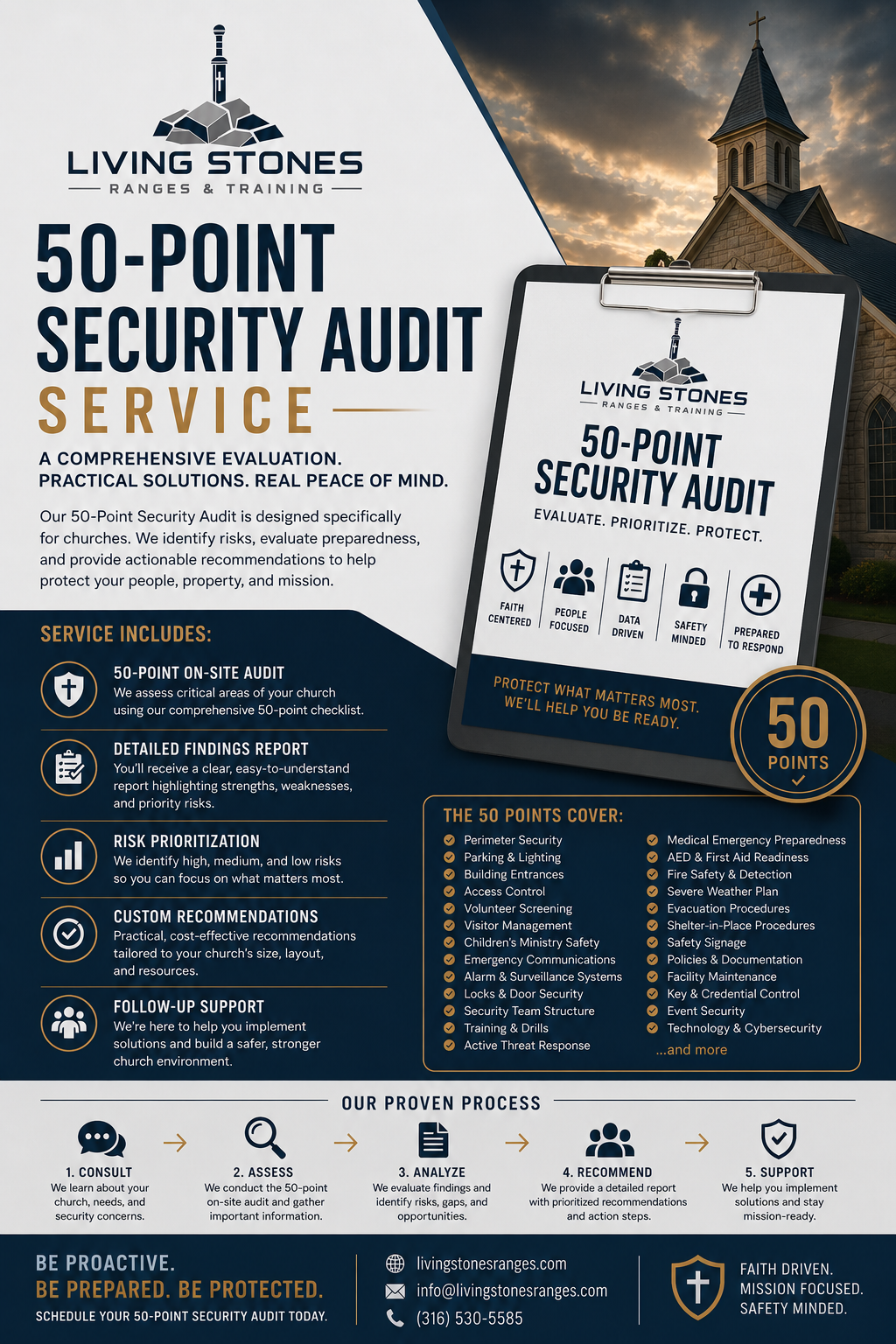
LSRT will conduct an on-site church safety/security audit that includes:
On-site walkthrough and audit of your facilities and safety/security program
Verbal and written 50-Point audit results
Written priority list of improvements to be made
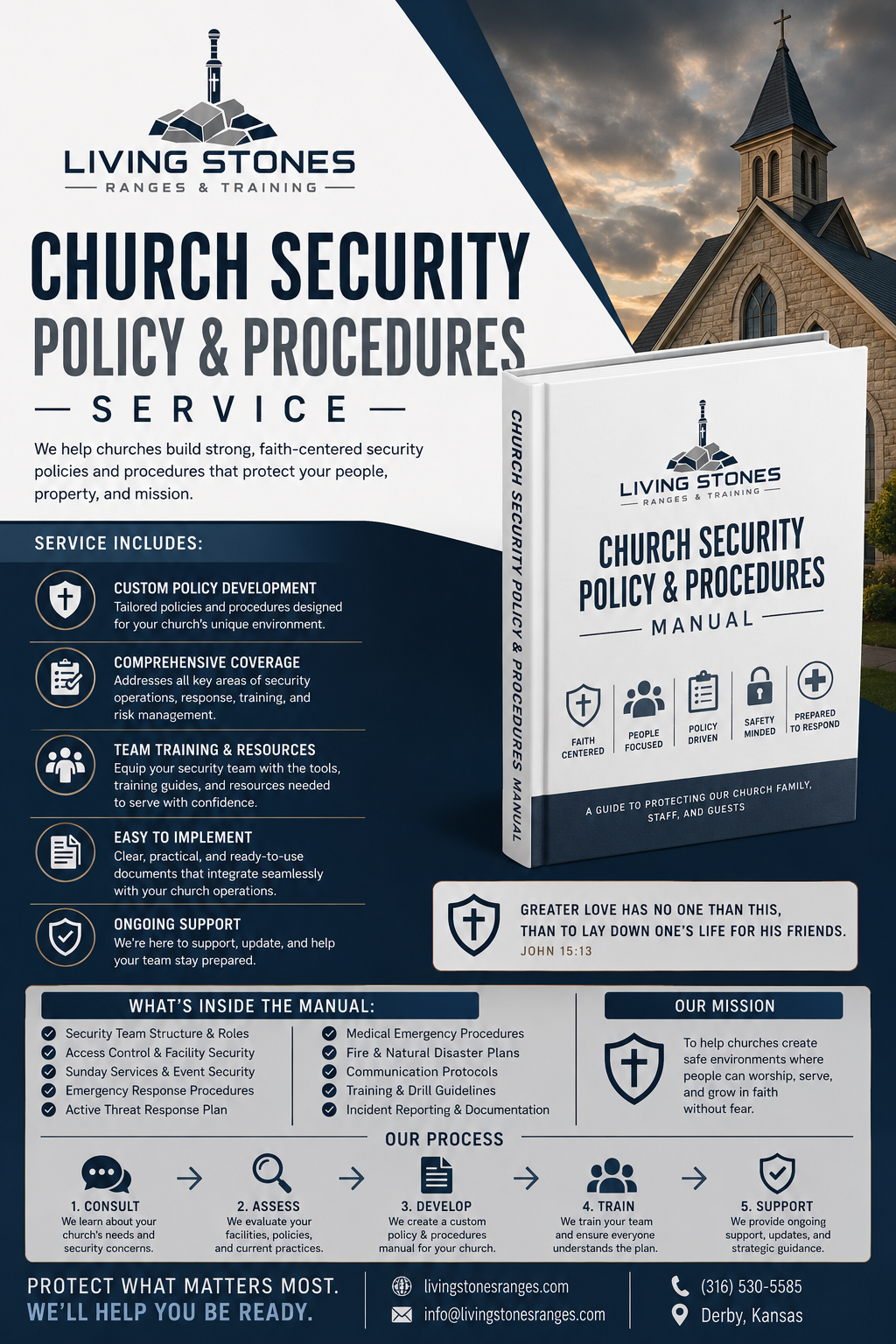
LSRT will conduct an on-site church safety/security audit that covers your physical security, planning, and procedures. Following the audit, we will consult with your leadership to develop a proper set of policies and procedures by which your team should be operating.
This product includes:
On-site walkthrough and audit of your facilities and safety/security program
Verbal and written 50-Point audit results
Written priority list of improvements to be made
Consult and communication with leadership regarding policies and procedures
A digital format “Policy and Procedure” manual for your church safety/security team
1 week client change and review period to ensure your Policies and Procedures meet your needs
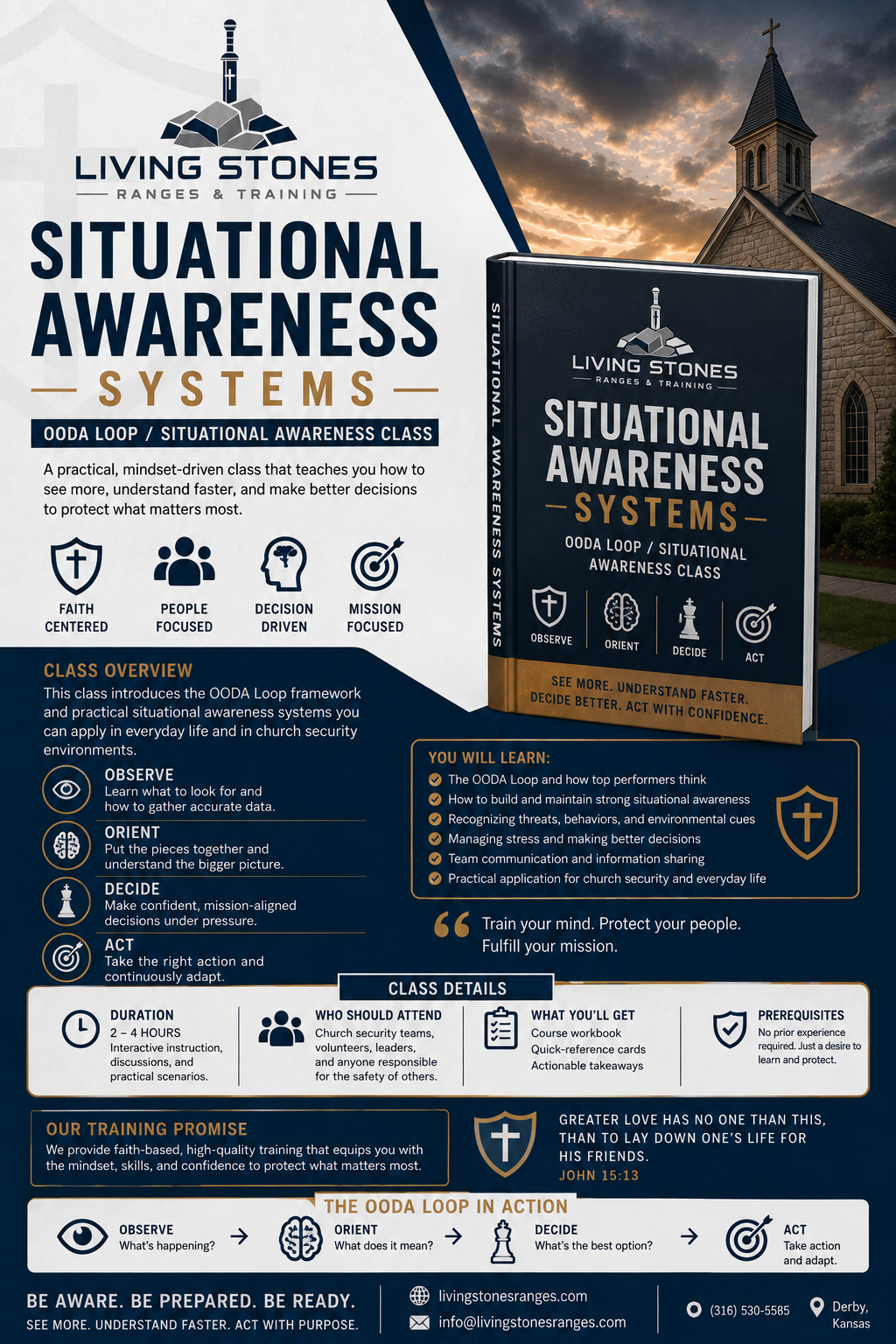
This 5-hour class teaches the systematic employment of your church security team’s most valuable tool, situational awareness. It will lay the foundation for how your team functions when responding to any situation. This is not a class of theory, all topics covered will be brought together in exercises. Exercises are mechanisms by which your team will learn how to identify threats/problems, communicate threats/problems, and ultimately take decisive action to solve or stop threats or problems.
Topics Covered:
Situational Awareness
Complacency
Crew Resource Management
Communication
Culture
Observation / Counter Observation
Identifying Environmental Baselines
Identifying Environmental Anomalies
Orientation to Problems
Decision Making
Taking Action
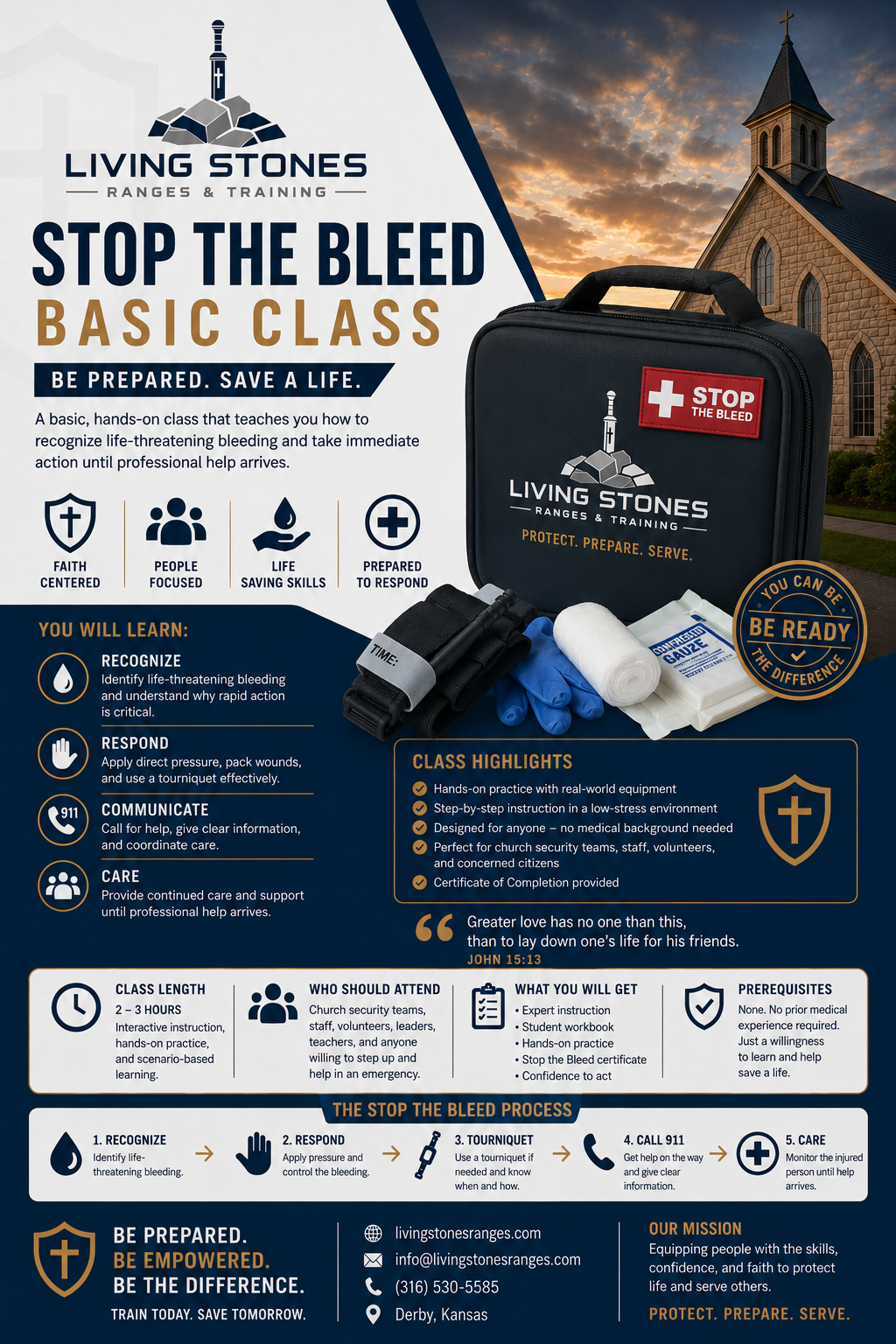
A basic stop the bleed course designed to equip your security team with the knowledge and skills to control severe bleeding before professional medical help arrives. Students will learn how to quickly recognize life-threatening hemorrhage, prioritize treatment, and confidently use proven bleeding control techniques based on modern Tactical Emergency Casualty Care (TECC) principles.
Topics Covered
Scene safety and emergency priorities
Recognizing life-threatening bleeding
Types of bleeding and injury assessment
Direct pressure techniques
Proper tourniquet selection and application
One and two-handed tourniquet application
Wound packing with gauze and hemostatic agents
Treating junctional wounds
Preventing shock and hypothermia
Continued patient care until EMS arrives
Hands-on practical exercises
Patient Moving Techniques
The Why
Why Conduct a Security Audit?
Why Conduct a Security Audit?
Conducting audits of your own security protocols, conduct, and physical areas of preparedness allows you to identify weak points in your structure. Unfortunately, due to the nature of bias confirmation, we can become blind to our own weaknesses. It is good to have many sets of eyes and minds take a look at the problem. Doing this is wise. However, due to the nature of church security and volunteer staffing you may not have the knowledge, skill, or time available to you to properly conduct an audit, we want to help you with that. We provide an on-site written 50-point security audit to identify where your congregation can properly invest time, money, and training to improve your security posture. We do this because we believe it is pertinent to good stewardship.
Why Develop a Security Program?
A commonly overlooked necessity for worship place safety / security teams is the establishment of policy and procedures.
Written policy and procedures are critical for a security teams for the following reasons:
- They establish unity and purpose for team members
- They establish a mutual understanding of team structure
- They establish authorities and oversight
- They communicate the duties and responsibilities of team members
- They establish a standard of measurement for team competence and training
- They serve as the vehicle to pass on duties and responsibilities as leadership changes over time
- They serve as a reference for leaders as they make decisions, evaluate capabilities, or organize priorities for budgeting
The list could go on. It is important to note that when you establish policy and procedure that you must train and operate based on those policies and procedures. If utilized properly, policy and procedures are tools rather than overly bureaucratic instruments that simply hamstring your operations. It can be difficult to manage volunteer ministries. Policy and procedures can be used to aid you in that management process. And at the end of the end of the day, it's just good stewardship.
Why Conduct a Security Audit?
Why On-Site Training?
Many churches conduct training throughout the year, and it is the responsibly of the teams to do so. Conducting firearms training, CPR training, and de-escalation training is great! We provide training that covers situational awareness as a system and basic stop the bleed. All of these skills are important individually. However, over time, LSRT’s goal is to conduct the full spectrum of training with your team. This training creates building blocks that grant them the foundation needed to work through full scenarios as if it were the real thing. Because one day, it may be the real thing. One thing we have witnessed is that people do not rise to the occasion when emergencies happen, they fall to their baseline level of training.